You must log in or # to comment.
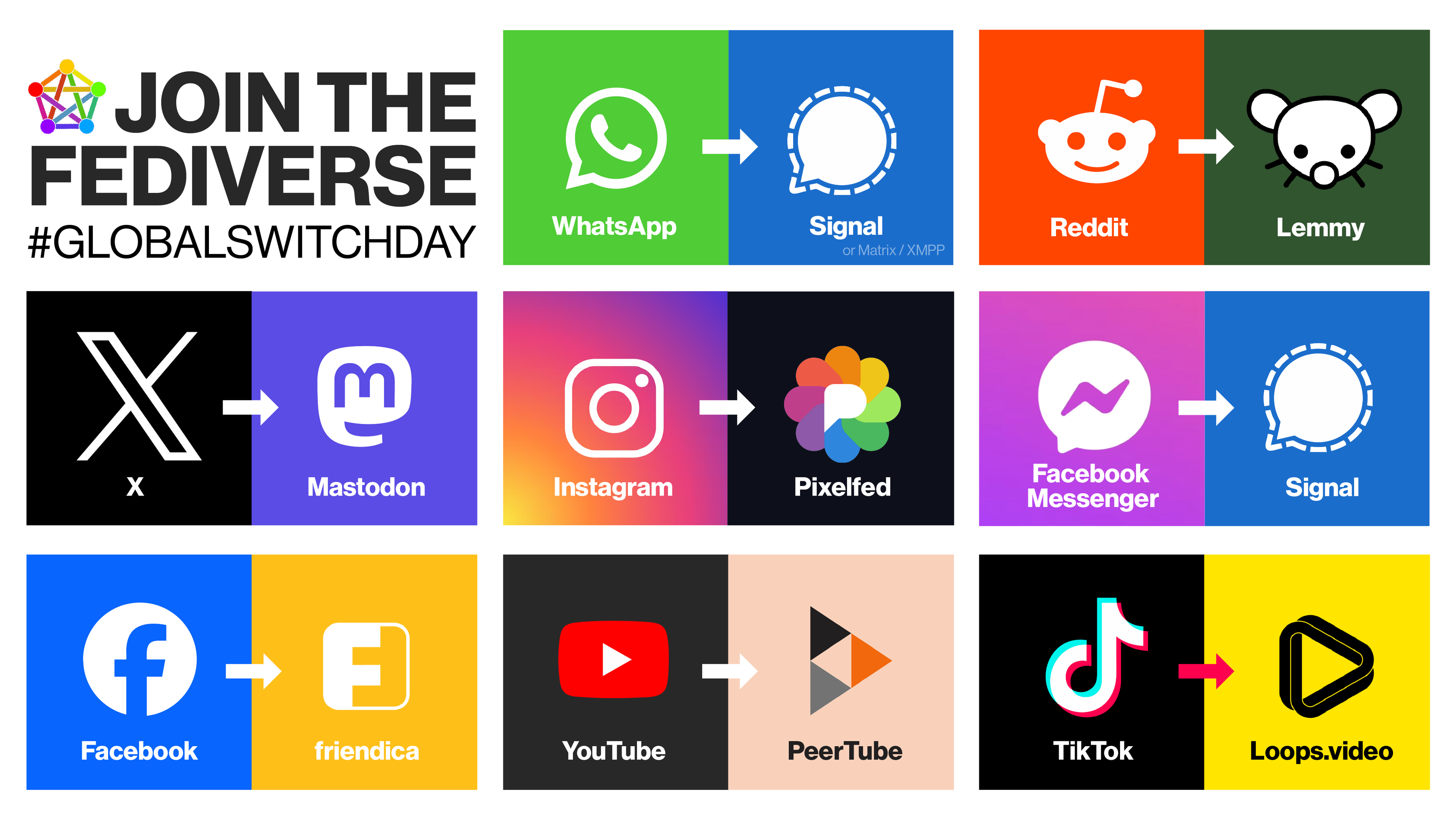
Signal isn’t federated [1][2][3.1]; it’s decentralized [1][2][3.2]. Though, for all practical purposes, I would generally argue that it’s centralized.
References
- Signal-Server. signalapp. Github. Published: 2025-01-31T15:34:14.000Z. Accessed: 2025-02-01T09:24Z. https://github.com/signalapp/Signal-Server.
- This is the source code for the server that Signal uses.
- “Signal (software)”. Wikipedia. Published: 2025-01-06T09:34Z. Accessed: 2025-02-1T09:30Z. https://en.wikipedia.org/wiki/Signal_(software).
- ¶“Architecture”. ¶“Servers”.
Signal relies on centralized servers that are maintained by Signal Messenger. In addition to routing Signal’s messages, the servers also facilitate the discovery of contacts who are also registered Signal users and the automatic exchange of users’ public keys. […]
- ¶“Architecture”. ¶“Servers”.
- “Reflections: The ecosystem is moving”. moxie0. Signal Blog. Published: 2016-05-10. Accessed: 2025-02-01T09:40Z. https://signal.org/blog/the-ecosystem-is-moving/.
- ¶5. to ¶“Stuck in time”. ¶3-6
One of the controversial things we did with Signal early on was to build it as an unfederated service. Nothing about any of the protocols we’ve developed requires centralization; it’s entirely possible to build a federated Signal Protocol-based messenger, but I no longer believe that it is possible to build a competitive federated messenger at all. […] [interoperable protocols] [have] taken us pretty far, but it’s undeniable that once you federate your protocol, it becomes very difficult to make changes. And right now, at the application level, things that stand still don’t fare very well in a world where the ecosystem is moving. […] Early on, I thought we’d federate Signal once its velocity had subsided. Now I realize that things will probably never slow down, and if anything the velocity of the entire landscape seems to be steadily increasing.
- ¶“Stuck in time”. “Federation and control”. ¶6.
An open source infrastructure for a centralized network now provides almost the same level of control as federated protocols, without giving up the ability to adapt. If a centralized provider with an open source infrastructure ever makes horrible changes, those that disagree have the software they need to run their own alternative instead. It may not be as beautiful as federation, but at this point it seems that it will have to do.
- ¶5. to ¶“Stuck in time”. ¶3-6
- Signal-Server. signalapp. Github. Published: 2025-01-31T15:34:14.000Z. Accessed: 2025-02-01T09:24Z. https://github.com/signalapp/Signal-Server.
Signal is not Fediverse! Element/Matrix is!
Element/matrix aren’t part of the fediverse, either. It doesn’t speak AP.
Are we claiming now that Activity Pub is the only protocol that we can use for the fediverse? I think XMPP is roughly 30 years old at this point, and I’m pretty sure Activity Pub is much younger than that. I could be wrong though.
But regardless, I don’t see why Activity Pub has to be the only protocol we accept to be considered a part of the fediverse. It’s not even like different AP implementations talk to each other all that well. My understanding is that Mastodon doesn’t federate that well with Lemmy, and I haven’t seen Loops or Pixelfed on Lemmy yet either.
I’d be happy to be corrected on any of this though, I haven’t looked too closely into exactly how AP works or how it’s supposed to interoperate with different applications.
Matrix is federated, Signal is not.
although it is federated, it isn’t apart of the fediverse, as it doesn’t use activitypub.