- 39 Posts
- 22 Comments




 1·11 hours ago
But are there European countries banning such second jobs?
Many European nations decided to ban MPs from having second jobs precisely for this reason.
I agree with what you’ve said including on the ban of MP’s second jobs, but are there countries in Europe that ban such jobs? It may not be as easy as in the UK, but it’s not completely banned anywhere afaik. Am I mistaken?
Dictatorships dont have the checks and balances. That is just a fact
And? The trend of a society that gets older and older can’t be reversed by dictatorial order. The issue of a countrywide worker shortage can’t be cracked down. A lack of resources to pay reasonable pensions is a problem you can’t shoot at.

Why?
the EU is supposed to “do something”.
The first funding instruments are in place with some of them already issued.
Stockpiles should have been built in the past already. European managers and politicians talked about it during the pandemic, but didn’t do much, but the learning curve might have been steep in the more recent past as Europe might have learned that foreign countries - particularly China - aren’t reliable.
Ukraine was facing a population decline already before 2022, and the war made the situation worse. But Ukraine is by far not alone with the problem of a shrinking population as almost the entire world will face it in the next decades. Only a few countries in Central Asia and Africa are exempted. The decline is especially pronounced in China, where the population will decline by a factor of 2.2 in this century reaching ~600 million, down form the current 1.4 billion) as well as in the U.S., and Russia, where fertility rates have fallen below the population replacement level.


TL;DR:
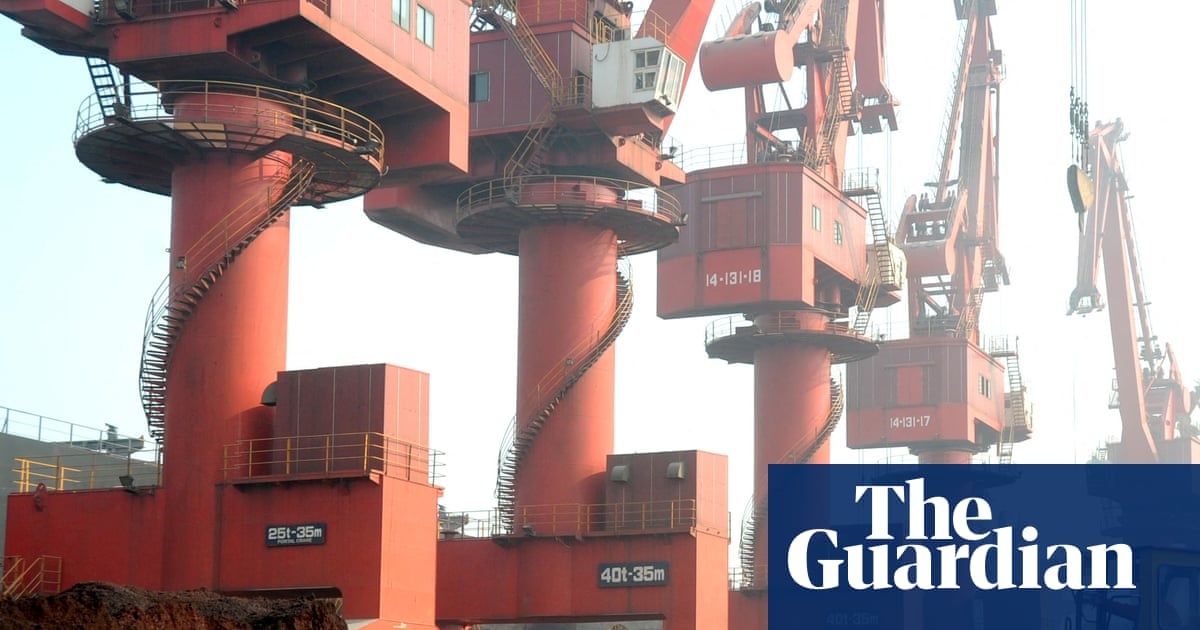
Lithuania’s interests had been safeguarded and that the country’s annual exports to China had recovered to levels similar to those recorded before Beijing began applying economic pressure on Lithuania [due to Lithuania’s allowance of opening a Taiwanese representative office in Vilnius under the name “Taiwanese”, rather than “Taipei”] … The EU said “the main objectives of the dispute were achieved and the relevant trade has resumed."
Yes, but Europe must also revive its renewable energy industry to avoid dependence from malign influence and dependence from abroad …
 1·2 days ago
Germany’s foreign minister to visit China next week, as EU prepares to toughen up on trade
The European Union is expected to toughen its trade stance on China next month, with signs that Germany - the EU’s largest member and economy - is aligning with the shift and that the 27-member bloc may be sufficiently united to push through policy changes that deepen ties with like-minded trading partners …
China’s weaker economy and its move up the value chain of industrial production means it is no longer the reliable market it once was for German exports.
But Germany still remains a key investment partner for China, which is struggling to attract fresh funds as its post-COVID recovery struggles for momentum …
Germany’s foreign minister to visit China next week, as EU prepares to toughen up on trade
The European Union is expected to toughen its trade stance on China next month, with signs that Germany - the EU’s largest member and economy - is aligning with the shift and that the 27-member bloc may be sufficiently united to push through policy changes that deepen ties with like-minded trading partners …
China’s weaker economy and its move up the value chain of industrial production means it is no longer the reliable market it once was for German exports.
But Germany still remains a key investment partner for China, which is struggling to attract fresh funds as its post-COVID recovery struggles for momentum …


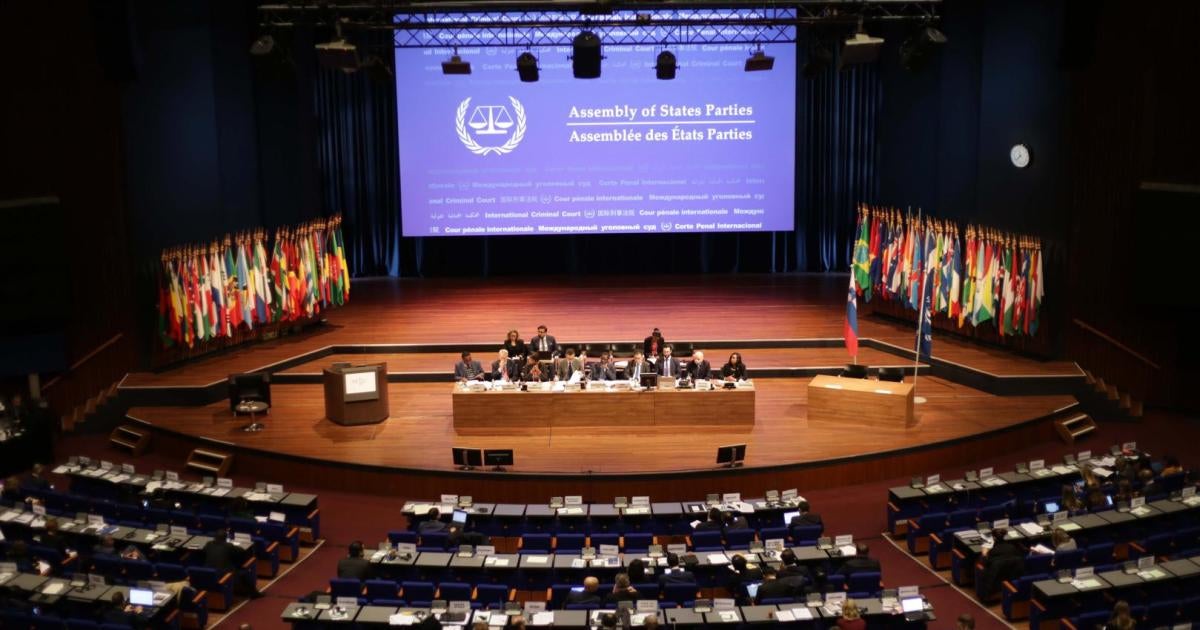







So can he demand accountability now? Or will this be again seen as ‘crossing the line’?
Lemmygrad./ml [users] frequently share posts that support authoritarian regimes, as seen in their support for China, North Korea, and Russia. Moreover, their support can extend beyond backing these authoritarian regimes, even cheering on their violent actions, as evidenced by their posts on the Russian invasion of Ukraine …
Lemmygrad./ml … also serves as a hub for left-wing extremist subreddits that faced restrictions from Reddit. [There is] an increase in user activity and toxicity levels on Lemmygrad.ml following the migration of r/GenZedong and r/GenZhou. Furthermore, our analysis of the content revealed posts supporting authoritarian regimes, endorsing the Russian invasion of Ukraine, and exhibiting anti-Zionist and antisemitic rhetoric. Our findings underscore the importance of studying left-wing extremism on decentralized platforms alongside right-wing extremism to gain a comprehensive understanding of the full spectrum of political extremism on the Decentralized Web …
The degree of Chinese propaganda in this thread is astonishing even for Lemmy. It’s almost hilarious how the reality (may it be intentional or unintentional) is ignored just to make the West look bad and China portraying as the big and only.
There is a lot wrong in ‘the West’ with housing, and countries offering sometime reasonable solutions, and sometimes not. But China has a long way to go also in this respect as the housing condition for a large portion of Chinese people is devastating.
As one research study (here is the archived link) says:
Depending on how one defines homelessness, China has either a very tiny homeless population or an extremely large one. Compared to other countries, there very few vagrants: people living on the streets of China’s cities without means of support. But if one counts the people who migrated to cities without a legal permit (hukou), work as day laborers without job security or a company dormitory, and live in overcrowded and unsanitary conditions on the edge of cities, there are nearly 300 million homeless.
Unlike the ‘communist’ agenda of China that is conveyed here in this thread, a study’s conclusion is:
Free market fundamentalism is responsible for the emergence of this sort of homelessness in China.
Another commentary concludes,
China is confronted with a housing paradox. The housing market is crashing, yet more than a fifth of the Chinese population is homeless.
It’s really is to find reliable and very good sources on homelessness in China.
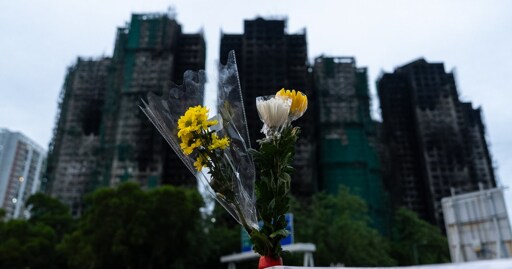
It also tells you a lot that as anger mounts in Hong Kong over apartment fires, Beijing warns against ‘anti-China disruptors’ – (archived link).
But I understand that you cannot discuss this here. As some sort of projection of their own behaviour, they accuse others of ‘propaganda’ and ignore the facts. It is likely this why Lemmy is still a niche and, as long as this sentiment prevails, will never meaningfully grow imo.
[Edit typo.]
Oh, yes, sounds very impressive. But don’t make the mistake to think that ‘ownership’ in China means the same as in Western democracies.
In 1949, when the People’s Republic of China was founded, all land was nationalized. Although the (most) residents didn’t pay rent, the government owned all the land.
In 1980, Deng Xiaoping changed the law and formalized the ownership, but this didn’t change the fact that the land was -and sill is- owned by the state. Property rights in mainland China are some sort of ‘lease rights’ (IIRC 70 years for private property and 50 years for commercial property).
It is true that by this law, most of Chinese citizens indeed have been ending up with property/lease rights. But be aware that the government can revoke this right at any time for no reason as the government still owns the land.
Probably, I am not an expert in construction, but several reports (including this one) say there is a lack of security. Another one is economic struggle as the article also suggest. Many people wouldn’t live in these homes if they had a choice, but homelessness is on the rise in Hong Kong.
… “Every night on the streets is an emergency. This is a very wealthy city — but one in five at this moment are experiencing food insecurity,” ImpactHK founder Jeffrey Rotmeyer told Al Jazeera.
“These are scary times. We’ve seen the percentage of females on the street double [since the pandemic], and we’ve seen about a 25 percent increase overall. And we are seeing homeless communities pop up in new areas" …
No, it effects ‘ordinary’ Chinese people as many invested their life savings hoping to pay for a house or an apartment for themselves and their children. Their money is now gone for property that will never be built, or is half-built and’ll be never finished. Many are now left behind with an amount of debt.
As the article says:
Money flooded into real estate as the emerging middle class leapt upon what was one of the few safe investments available, pushing home prices up sixfold over the 15 years ending in 2022. … At its peak, the sector directly and indirectly accounted for about a quarter of domestic output and almost 80% of household assets.
The consequences are dire:
With household debt at a high of 145% of disposable income per capita at the end of 2023, homeowners are increasingly under financial pressure. The country’s residential mortgage delinquency ratio – which tracks overdue mortgage payments – jumped to the highest in four years as of late 2023. Some homeowners are being forced to sell their properties at a discounted rate, which is only exacerbating the problem … the situation could deteriorate further in 2026 as households struggle to repay mortgages and other loans.
The data for these inferences comes from official Chinese sources - which is, once again, a very bad sign given as China’s official statistics are ‘opaque’ to say the least. The article reads:
The property sector’s drag on inflation could even be greater than official data suggest [because] the methodology used to determine China’s official Consumer Price Index understates falling rents, and, by extension, the broader deflationary impact.
It could even be worse than the data suggests.
And it definitely effects a large number of Chinese people of the middle class, just like you and me.
[Edit for clarity.]
A similar case recently happened in Germany, where the country’s authorities face heavy criticism after admitting that a 56-year-old Uyghur asylum-seeker was mistakenly put on a plane to China instead of to Turkey.
According to reports (one is here), the woman, Reziwanguli Baikeli, had fled China’s Xinjiang region in 2017, lived in Turkey for several years and joined her daughter in Germany in 2024. Uyghurs are recognised by Germany as a group at extreme risk of persecution; informal guidance says they should not be returned to China.
Experts call for Germany (and possibly the whole of Europe) for a federal “white list” of countries to which deportations are categorically barred, similar to policies already used in Sweden and the Netherlands.
Yeah, mainland China - the other China, so to say - shows a similar stance. Despite critical voices of Beijing regarding Israel’s war in Gaza, ties between China and Israel have in many ways proven resilient. Bilateral trade rose to USD 16.3 billion in 2024, up almost 12% from 2023, for example.
Despite Israel having banned Chinese suppliers from sensitive military procurement, commercial ties improved as trade data shows. In addition to U.S. companies, Chinese technology firms are a decisive supplier of Israel surveillance tech in Gaza and the West Bank (you’d easily find many reports on the web about that).
As an addition:
Russian drone slams into block of flats in deadly wave of strikes across Kyiv - [includes some short video]
A Russian drone has slammed into a block of flats in eastern Kyiv, killing six people and wounding dozens of others, during a wave of strikes throughout the Ukrainian capital.
That’s a global phenomenon,unfortunately. Researchers found PFAS chemicals in tap and bottled water in major cities across the UK and China., just to provide an example.